As a college librarian, I often hear stressed-out students searching for primary sources say, "I'll take anything." Don't settle for just anything. There is a treasury of primary source material available electronically. Peruse my selection of 200-plus primary source sites by conducting a keyword search, exploring the tag cloud at left, or browsing by historical era. You can also visit my Delicious and Diigo sites to review my bookmarks. Here's hoping you find what you're looking for.

Thursday, October 16, 2014

David Greenglass, Ethel Rosenberg's Brother, Spy Ring Co-Conspirator dead at 92

The New York Times this week published a belated obituary for David Greenglass, 92, whose spy-trial testimony helped seal the fate of his sister and brother-in-law, Ethel and Julius Rosenberg. The article reads, in part:

“For his role in the conspiracy, Mr. Greenglass, an Army sergeant whohad stolen nuclear intelligence from Los Alamos, N.M., went to prison for almost a decade, then changed his name and lived quietly until a journalist tracked him down. He admitted then, nearly a half-century later, that he had lied on the witness stand to save his wife from prosecution, giving testimony that he was never sure about but that nevertheless helped send his sister and her husband to the electric chair in 1953.”

A variety of sites provide a wealth of primary source material on the Rosenberg trial, and the Greenglass’s role in those proceedings. The Wilson Center’s Rosenberg Archive: A Historical Timeline contains a variety of digitized items, among them are the code-breaking VENONA files which provided evidence of the Rosenbergs' One Soviet intelligence cable in that collection notes that Liberal (Julius Rosenberg’s code name) “recommended the wife of his wife’s brother, Ruth Greenglass.” The National Security Archive provides access to Rosenberg Grand Jury Files, including testimony of Ruth Greenglass. The Famous Trials website from the University of Missouri Kansas City School of Law includes trial testimony, images and the text of the Rosenberg’s last letter to their children.
involvement with the Soviet spy ring.

The image show above depicts Mr. Greenglass and his late wife, Ruth. That image, along with a number of others, is available at The National Archives.

Wednesday, October 15, 2014

Lethal Illness: A Historical Perspective

As you can see from the above title-page, debates over governments’ responses to outbreaks of deadly, contagious illnesses are nothing new. The image above comes from a work published during the Great Plague of London in and is the digital archive Contagion: Historical View of Diseases and Epidemic. That archive, part of Harvard University’s Open Collections Program, features material relating to a variety of lethal sicknesses, from the pestilence of the late 15th Century to the Spanish Influence Epidemic of 1918-1919.

Tuesday, September 25, 2012

A Resource for Spenser Scholars

My inaugural post this academic year features a resource created by the students I work with at Stonehill College. Spenser's "Faerie Queene" in the Archives is a repository of original research on Spenser's Faerie Queene (1590, 1596); the essays presented on the site have been written by members of ENG304: "Spenser's Faerie Queene in the Archives," a course taught during the spring semester of 2012, at Stonehill, by Professor Helga Duncan. The essays included are intended as a scholarly resource for readers and students of Spenser's poem, and offer reflections on the cultural contexts in which Spenser lived and worked.

While the essays are secondary sources, a look at the bibliographies will shed light on the varied primary sources the students examined as part of their research. Some of those works are: Elizabeth I: Collected Works, Sir Thomas Malory’s Le morte d’Arthur: King Arthur and the Legends of the Round Table, Monmouth's The History of the Kings of Britain, Spenser's A View of the State of Ireland, and Chinigchinich: A Historical Account of the Origin, Customs, and Traditions of  the Indians At the Missionary Establishment of St. Juan Capistrano, Alta-California.

Take a look at the site. Leave a comment if you wish. These Stonehill authors are eager to receive comments on their work.

Tuesday, April 3, 2012

Uncle Sam yourself. You might be amazed at what you find.


The National Archives and Records Administration yesterday released individual records from the 1940 Census. Packaged together with fascinating extras, such as videos from that time period and visualization tools allowing you to better understand population changes, this online data set provides users with a wealth of historical information. It might also provide you with a detailed snapshot of your ancestors’ lives 72 years ago

I took a look at the records for my mother’s kin – the McDonalds. Sadly, the 1940 census provided a last glimpse at an intact family. Months after the census was taken in April of 1940, my grandfather, James, died. He left behind his wife, Anna, and their four children, among them my 13-year old mother.

The census data provided me with some primary source verification for tales I heard as a child. I recall my mom telling me that her mother had to stand in bread lines as the McDonalds, like so many families, struggled during the Depression. Indeed, the 1940 census data shows that my grandfather reported no income from his job as a cotton salesman during the previous year. With her husband dead and the family in difficult financial straits, my grandmother became the head of the household.

The census data doesn't tell what came after. Anna McDonald saw two sons off to war - one served with the Army in France and another with the Navy in the Pacific during World War II. She welcomed both home. Her eldest daughter went overseas during the war as well, teaching the children of servicemen. My mother stayed in Massachusetts, finished high school and went to work as a telephone operator. All four of Anna's children eventually married. Between them, they gave her 12 grandchildren. There were better days, and many opportunities to make wonderful family memories. And while the numbers released yesterday don't describe those good times, the 1940 census helps provide insight into the strength she possessed that saw her, and her family, through the bad times.

Getting this information wasn't without difficulty. Interest in the 1940 census was so great yesterday that the millions of hits to the National Archives website crashed the system.  This morning things were working much more smoothly. Once on the site, you'll likely have to do a bit of exploring to find what you're looking for. As the 1940 Census has no names index, you have to first find the enumeration district in which your ancestor resided. If you have a specific street address, or even a town, that isn’t a difficult search as The 1940 Census page provides clear directions and online tools for tracking down that data.

The image at top  is a family photograph showing my grandmother, Anna, surrounded by her family. My mother, Mary, now 84, is the second from the right. The image below comes from the National Archives and shows the page of census data that tells the McDonalds' story. 

Friday, March 23, 2012

Noble Portraits, Controversial Representations

This week, the Smithsonian’s Past Imperfect blog featured a fascinating post on famed photographer Edward S. Curtis. A Wisconsin native, Curtis moved to Seattle, bought a camera and became a partner in a photography studio. In 1898 he met anthropologist George Bird Grinnell and the two forged a friendship which would ultimately lead Curtis to his vocation - photographing Native Americans.

Grinnell invited Curtis to accompany him on an expedition to Alaska in 1899 and an excursion to Montana the following year. It was there, in the land of the Piegan Blackfeet, that Curtis's efforts to capture Native Americans on his glass negatives began. He lobbied for and received the financial backing of J.P. Morgan. By 1930 he had taken more than 40,000 pictures and created the multivolume The North American Indian, described by the Library of Congress as “one of the most significant and controversial representations of traditional American Indian culture ever produced.” That work is available digitally from the Library of Congress’s American Memory project.

By 1930 Curtis has also fallen on hard times. He was divorced, facing financial ruin and in poor physical and mental health. The Smithsonian blog notes that when Curtis passed in 1952 at the age of 84, the last line of his New York Times obituary noted, “Mr. Curtis was also widely known as a photographer.”

The blog also pointed out that Mr. Curtis’s work has been the subject of much criticism, specifically for his manipulation of subjects and practice of having those subjects pose and reenact ceremonies. Despite that, his work is still a collection of magnificent, noble portraits.

The image of Curtis at top comes from the University of Washington portraits database.

Monday, March 19, 2012

Remarkable Creatures, Pioneering Scientists

 I recently finished reading Remarkable Creatures by Tracy Chevalier and was sorry when I reached the final page. Set in Dorset, the book tells the story of 19th century fossil hunters Elizabeth Philpot and Mary Anning and describes the impact their finds had on the scientific community’s study of paleontology and the question of creationism.

It wasn’t until I finished the book that I learned this work of historical fiction was based on real individuals. Back in the 1800s, Misses Anning and Philpot combed the dangerous, fossil-laden cliffs near Lyme Regis seeking specimens. They made an
odd pair. Miss Philpot took to fossil hunting as a diversion after moving to the coast from London. Miss Anning gathered fossils as a means to help support her destitute family. They were hugely successful in their quest. Mary Anning was credited with the discovery of the first plesiosaur and was responsible for finding a number of ichthyosaurs. Much of the novel is devoted to the struggle the women had in gaining respect for their knowledge and expertise. In fact, Mary Anning did become a well-known fossil hunter and paleontologist who was consulted by and corresponded with some of the most renowned scientists of the day.

Given my interest in primary sources, I imagined there must be a wealth of material available about Mary Anning and her work. JSTOR’s Early Journal Content provides access to an article written by noted British anatomist and paleontologist Sir Richard Owen that appeared in the in the 1844 edition of the Philosophical Transactions of the Royal Society of London.

In it, Owen writes:
One of the specimens discovered by Miss MARY ANNING of Lyme…has been presented, since the reading of the present memoir, by the Earl of Enniskillen to the College of Surgeons.
Mary Anning died of breast cancer in 1847. But prior to her passing, her contributions to the field of paleontology were acknowledged and she was presented with a small annuity from the Geological Society in recognition of her work. You can read the decision to grant that financial support in an 1848 edition of the Quarterly Report of the Geological Society of London. That work is available from Google Books.

The photo above of Mary Anning comes from the Natural History Museum in London.

Friday, March 9, 2012

Kony 2012 - The Story in Documents


A fascinating article in yesterday's New York Times deconstructs the Kony phenomena, explaining how the launch of a social media campaign brought immediate worldwide attention to the horrific deeds of Joseph Kony – leader of the Lord’s Resistance Army.
As of today, more than 70 million people have viewed Kony 2012 , the viral video about Kony – the Ugandan warlord who is accused a litany of atrocities including murder, rape and abducting children and forcing them to serve as soldiers. He is the subject of an arrest warrant issued in 2005 by the International Criminal Court. That documents reads, in part:

“…the LRA has engaged in a cycle of violence and established a pattern of
“brutalization of civilians” by acts including murder, abduction, sexual
enslavement, mutilation, as well as mass burnings of houses and looting of
camp settlements; that abducted civilians, including children, are said to have
been forcibly “recruited” as fighters, porters and sex slaves to serve the LRA
and to contribute to attacks against the Ugandan army and civilian communities...
The Kony 2012 film was produced by Invisible Children – a San Diego-based activist group. As the video’s reach has grown, Invisible Children has come under increasing scrutiny and Kony 2012 has faced growing criticism. This CNN story outlines the concerns of those who charge that Kony 2012 exaggerated the scope of the LRA’s atrocities and points out that Kony himself has not been in Uganda for many years. The fact that he is a merciless tyrant doesn't seem to be in question.

There is a wealth of primary source material available regarding Kony, The LRA, and the atrocities in Uganda and the Democratic Republic of the Congo. Among the items you’ll find are the arrest warrant issued for Kony by the International Criminal Court, The United Nations Working Paper on the six grave violations against children during conflict, and information about the UN Security Council’s condemnation of the continued use of child soldiers in armed conflict.

Monday, March 5, 2012

YouTube as a Primary Source Finder


Late last week I spent a lot of time with a student who was working on her senior thesis. She was searching for primary source material relating to the Pieds Noirs – the French citizens who lived in Algeria and later fled the country en masse following the Algerian War of Independence. She was hoping, ideally, to find some interviews or autobiographies. Language wasn’t an issue – the student knows French. Geography wasn’t a problem either – we were willing to order whatever she needed from wherever it was held through interlibrary loan. We just couldn’t find what she was looking for.

Then, we tried YouTube and hit pay dirt. A simple search for Pieds Noirs in that archive gave us a result set that included broadcast interviews with those who had left Algeria, news clips describing July 1962 massacre in the city of Oran, and stories showing the subsequent the exodus of the Pieds Noirs. More importantly, some of those hits led is us to ina.fr, the website for France’s National Audiovisual Institute. That site provides visitors the opportunity to view or listen to more than 30,000 hours of audiovisual material. Our search for Pieds Noirs in that resource turned up more than 80 different clips from news organizations.

The photo above depicts a boy carrying a toy rifle as he walks with his mother past French soldiers in battle gear at the Bastille Palace in Oran, Algeria, May 4, 1962. That image comes from the photo gallery featured in the US. State Department’s America.gov website

Friday, March 2, 2012

Using Google to Shed Light on the Edgewood Arsenal Experiments

Yesterday I read a troubling story about veterans suffering from long-term health problems due to the experiments they were subjected to at Maryland’s Edgewood Arsenal.

The CNN piece details how the U.S. Military tested chemical and biological agents on human subjects from the mid 1950s to the mid 1970s. One of those veterans interviewed for the piece said he volunteered for the Edgewood Arsenal experiment after being told that he and others would be testing equipment, such as gas masks.

A Google search yielded a host of materials related to these experiments. I searched for Edgewood Arsenal site:.gov to limit by initial search to government agencies - sites with .gov URL suffix. I turned up, among other things, a variety of documents in the National Archives that are related to the experimentation at Edgewood, the Library of Congress’s photos depicting a variety of different operation at Edgewood, and documents such as this one from the U.S. Department of Health and Human Services Agency for Toxic Substances and Disease Registry, which address possible health implications from the activities at Edgewood.

Another search, this time for Edgewood Arsenal site:.mil restrict my results set to military agencies – those with a .mil suffix. That search turned up a variety of additional material including a page produced by the U.s. Army Research, Development and

Engineering Command, devoted to the history of the Edgewood Chemical Biological Center and information about the field testing of hallucinogenic agents at Edgewood Arsenal .

The photo above depicts airplane spraying of U.S. Naval officers at Edgewood. The image comes from the U.S. Military’s Force Health Protection and Readiness Program.

Thursday, March 1, 2012

March 1, 1692 - The Hysteria Begins


The formal proceedings in the Salem Witchcraft hysteria began 320 years ago today,  when  Sarah Goode, Sarah Osborne, and Tituba, an Indian slave from Barbados, were charged with practicing  witchcraft. The three were examined by Magistrates John Hathorne and Jonathan Corwin. Tituba subsequently confesses and names Goode and Osborne as her co-conspirators.
There is a wealth of primary source material related to the Salem Witch trials available online including Salem Witch Trials: Documentary Archive and Transcription Project from the University of Virginia. That site provides access to a wide array of digitized materials such as court records, historical maps, and record books of Salem Village churches. In addition, The Famous American Trials website from the University of Missouri Kansas City also provides access to Salem Witch Trials resources . Among the items you’ll find there are digitized copies of arrest warrants and transcriptions of petitions for mercy from convicted witches awaiting execution.
The image above is of the painting The Trial of George Jacobs of Salem for Witchcraft by artist Tompkins Harrison Matteson. The image comes from the Library of Congress’s Prints and Photographs Division.

We're Back

I apologize for the longer-than expected hiatus. Personal and professional commitments kept me away from the blog for a time. Now, I'm back and will once again regularly post about interesting primary source collections. Do you manage such a collection or know about a site that hasn't yet been featured here? Please let me know about it.

Thursday, November 3, 2011

Royal Society's historical journal archive provides access to scientific pioneers' early work

Last week, The Royal Society announced that it would provide permanent, free access to its historical journal archive.

The first edition of the Royal Society’s Philosophical Transactions appeared in 1665 and its publication continues today. According to information provided from the Society, items available in the historical archive include Isaac Newton’s first published scientific paper, writings by a young Charles Darwin and a letter from Benjamin Franklin detailing his experiments with electricity.

Users can browse through individual issues or search by date, author, or keyword. The image above, a Currier & Ives print of Franklin’s kite experiment, comes from the Library of Congress.

Tuesday, September 27, 2011

New Education Statistics Released: Who Will Be Left Behind in 2020

Late last week President Obama announced significant changes to No Child Left Behind – the federal education reform statute that requires all students be proficient in math and reading by 2014. The changes will provide states with more autonomy to oversee their own educational improvement efforts. As the New York Times reported, those states that adopt higher educational standards, address problems at their lowest-performing schools and overhaul teacher evaluation procedures can apply for waivers of some key provisions of the law – including the 2014 proficiency deadline.

Will those changes have a significant impact on the performance of the nation’s schools and students? Time will tell. A recently released compilation of federal statistics does provide some insight into what changes the nation’s public education system might see over the course of the next decade.

The National Center for Education Statistics recently released “Projections of Education Statistics to 2020”. That report includes state-by-state data on projections of public elementary and secondary enrollment and public high school graduates to the year 2020. Users can browse through the document or download it as a PDF. Among the information you will find are statistics relating to school enrollment, student-teacher ratios, per-pupil expenditures and number of high school graduates.

The No Child Left Behind logo that appears above left comes from the House Committee on Education in the Workforce.

Wednesday, September 21, 2011

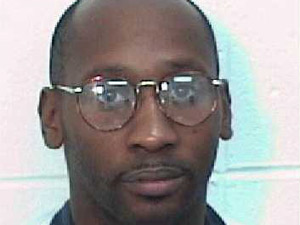
As the hour of Davis execution nears, calls for clemency grow louder.

The scheduled execution of Georgia death row inmate Troy Davis is just hours away as I write this. As the appointed time of 7 p.m. approaches, protests are mounting and calls for clemency are growing louder here in the United States and around the globe.

Davis, 42, was convicted of the 1989 killing of off-duty police officer Mark MacPhail. Representatives of the NAACP, Amnesty International, along with Pope Benedict XVI and former President Jimmy Carter are among those who have called for a halt to the execution of Davis. Davis has steadfastly maintained his innocence and his conviction came despite a lack of physical evidence and the failure to find the murder weapon. In addition, a key witness subsequently recanted his testimony. The murdered police officer's family members maintain that prosecutors had the right man and Davis is not innocent.

Is Georgia planning to execute an innocent man? I don’t know the answer to that question. I do know that there have been instances where inmates under the sentence of death have been exonerated due to DNA evidence. The Innocence Project maintains a searchable database of such individuals. Established in 1992at the Benjamin N. Cardozo School of Law at Yeshiva University, The Innocence Project lists its mission as “nothing less than to free the staggering numbers of innocent people who remain incarcerated.”

The National Criminal Justice Reference Service also provides some numbers that give one pause. In addition to statistics about the demographic characteristics of death row inmates, the average elapsed time between sentencing and execution and the method of execution in individual states the agency also provides data about the number of people who have been removed from the list. Why were they removed: Some were executed, some died of natural causes while on death row, some had their sentences commuted and still others were exonerated.

Perhaps the most chilling resource I discovered was a list maintained by the Death Penalty Information Center, a non-profit organization established in 1990 to provide the media and the public with analysis and information on issues concerning capital punishment. They maintain a list of the "Executed but Possibly Innocent" that details the case against the individuals, their conviction, and execution. It also provides links to court documents, journal articles and media reports related to those cases.

The above photo of Troy Davis comes from Amnesty International.

Monday, September 19, 2011

JSTOR's Early Journal Content: a rich source of historical material

When I introduce freshman history students to our electronic resources, I suggest they consider using the JSTOR database as both a primary and a secondary source finder. Now, everyone – even those without subscription access to JSTOR – can access a wealth of material dating back well before 1870.

Earlier this month JSTOR officials announced that journal content in JSTOR published before 1923 in the United States and prior to 1870 outside the U.S. is available to all, for free.  The “Early Journal Content” accounts for about 6 percent of total JSTOR content and editorials, reviews and scholarly articles on the arts and humanities, economic s and politics, math and other sciences.
So why should primary source hunters care about this development? Such access can provide student researchers with insight into what scholars and scientists of the time were thinking and writing about particular topics.
One recent class of history students was studying 1893’s World’s Columbian Exposition in Chicago. That World’s Fair, held to commemorate the 400th anniversary or Columbus’s discovery of the New World brought more than 27 million people to the Windy City.  The toured the fair’s 600 cares, visited the 200 buildings erected for its six month run and marveled at the man- made lagoons and canals. Certainly, some practical preparations had to be made for such a mass influx of tourists
Browsing through JSTOR, I came across and 1893 article from Science magazine titled “Disposal of Waste at the World's Columbian Exposition”. The details in that piece provide an interesting historical take on wastewater treatment projects.
That might not be a project that interests you, but whatever your focus, browse through JSTOR’s Early Journal Content. You might be pleasantly surprised at what you’ll find.
The above photograph of the World’s Columbian Exposition comes from the Library of Congress.

Tuesday, September 6, 2011

Visual Archives of the 9/11 Attacks

This weekend, the Associated Press published an interesting article about the Internet Archive’s September 11 video archive. That collection shows how the day’s horrific events unfolded from the perspective on international news broadcasters. Initial confusion over an “accident” at the World Trade Center evolves into fear as the scope of the attacks broadens. Horror and disbelief creep into the voice of news anchors as the magnitude of the losses becomes apparent.

The Internet Archive was founded in California in 1996. It aims to offer include offering permanent access for researchers, historians, scholars, people with disabilities, and the general public to digitized historical collections.

In addition to the September 11 video archive, it’s offerings include The Wayback Machine, an archive of web pages. By using the Wayback Machine to search different news sites for Sept. 11, 2001, users can get a glimpse of the hypertext archive of the attack on America.

The photo above, which depicts a memorial left at the Pentagon crash site, comes from the Library of Congress’s September 11, 2001 Documentary Project.

Thursday, September 1, 2011

National Jukebox: Early 20th-Century Recordings Streamed to your Computer

On May 18, 1921, the Steamship Wheaton arrived in Hoboken, N.J. with hallowed cargo in its hold – the bodies of 5212 American war dead, being returned to the United States from Cherbourg and Antwerp as part of a Congressional plan to bring the fallen home. Several days after the Wheaton’s arrival, President Warren G. Harding retired to the White House study and recorded remarks to the nation about the return of those who made the ultimate sacrifice.

His words can be heard on the National Jukebox, a new initiative from the Library of Congress. The Library of Congress presents the National Jukebox, which makes historical sound recordings available in streaming format to the public free of charge.

The Collection, which continues to grow, currently contains more than 10,000 recordings made between 1901 and 1925. Those audio files include pop music, comedy skits, literary readings, political speeches and more. Visitors to the National Jukebox can search recordings by artist and genre or choose to browse through the collection.

The photo above of President Harding comes from the Library of Congress.


Tuesday, August 30, 2011

National Hurricane Center: A Rich Source of Historical Storm Data

My return to work for the 2011 – 2012 academic year was delayed for a day due to power outages caused by Tropical Storm Irene. While some neighbors remain without power and cleanup of downed trees continues, we didn’t see the type of devastation here in Southeastern Massachusetts that others did elsewhere.

While tracking the storm over the past week, I learned the National Hurricane Center’s website has a wealth of historical data related to past tropical storms and hurricanes. Visit the site’s history section and you can retrieve data about the deadliest and costliest Atlantic tropical storms. Additionally, you can find an archive of forecasts and advisories issued in past hurricane seasons.

The AP picture above left illustrates some of the damage inflicted on southern Vermont by Irene over the weekend. The image below left comes from the Providence Journal and shows the wind-driven surf of 1954’s Hurricane Carol into a Cranston, RI yacht club.

Wednesday, June 8, 2011

The (complete) Pentagon Papers Release Slated for Monday

An article in this morning’s New York Times details the government’s plans to declassify the entirety of the Pentagon Papers, the U.S. government’s secret study of the war in Vietnam. That release will come 40 years after the Times publication of much, but not all, of that study. Now, each page will be scanned and be made available electronically through the National Archives and Records Administration.

The article appearing in today’s paper puts the release in an interesting historical context, contrasting the Vietnam Era publication of the Pentagon Papers to today’s era of WikiLeaks. Daniel Ellsberg, the former Rand Corporation analyst who helped compile the report that would become known as the Pentagon papers, leaked it to the New York Times and subsequently faced 12 felony counts as a result of that release, it quoted at length.

The article reads, in part: “It seems to me that what the Pentagon Papers really demonstrated 40 years ago was the price of (the usurping of Congressional war-making powers by the executive branch),” Ellsberg said. “Which is that letting a small group of men in secret in the executive branch make these decisions — initiate them secretly, carry them out secretly and manipulate Congress, and lie to Congress and the public as to why they’re doing it and what they’re doing — is a recipe for, a guarantee of Vietnams and Iraqs and Libyas, and in general foolish, reckless, dangerous policies.”

As the release date nears, and policies are debated, those preparing for that discussion will have the full text of the Pentagon Papers available for their perusal.

The photo of Ellsberg, above, comes from the Nixon Presidential Library and Museum The museum’s collections also include an oral history interview with Ellsberg and a variety of other interview and digitized documents pertaining to the Pentagon Papers.

Monday, June 6, 2011

D-Day Remembered

June 6 marks the 67th anniversary of D-Day, the invasion of Normandy.  More than 130,000 American, English and Canadian troops stormed the Omaha, Utah, Gold, Juno and Sword Beaches on that day. The Dwight D. Eisenhower Presidential Library and Museum has a compelling collection of digitized primary documents related to the invasion. Among those papers you’ll find General Eisenhower’s “Orders of the Day” for June 6, 1944 – the statement he issued to members of the expeditionary force as D-Day commenced. Also, you’ll find a digitized copy of a scrawled press release to be used, if necessary, titled “In Case of Failure Message.”
 The photo above shows American soldiers on Omaha Beach recovering the dead after the D Day invasion of France. It comes from the Library of Congress.